

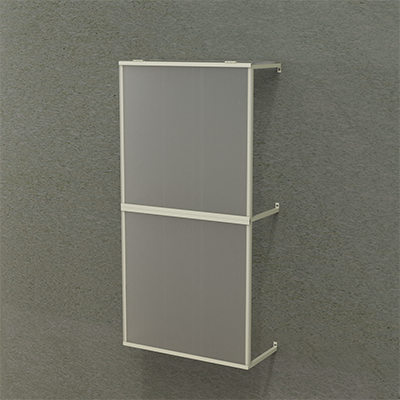
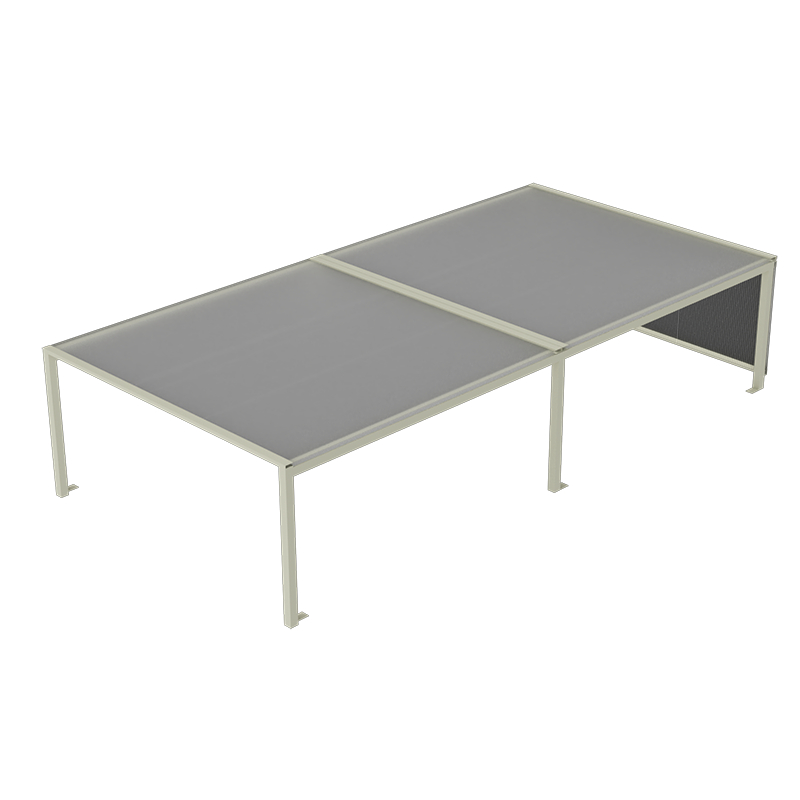
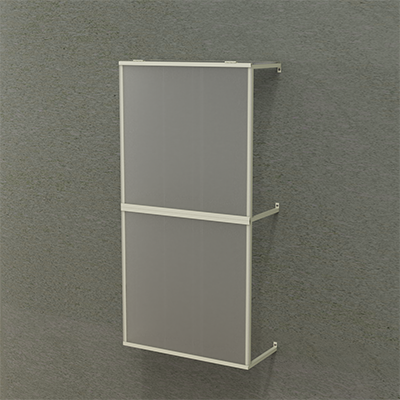
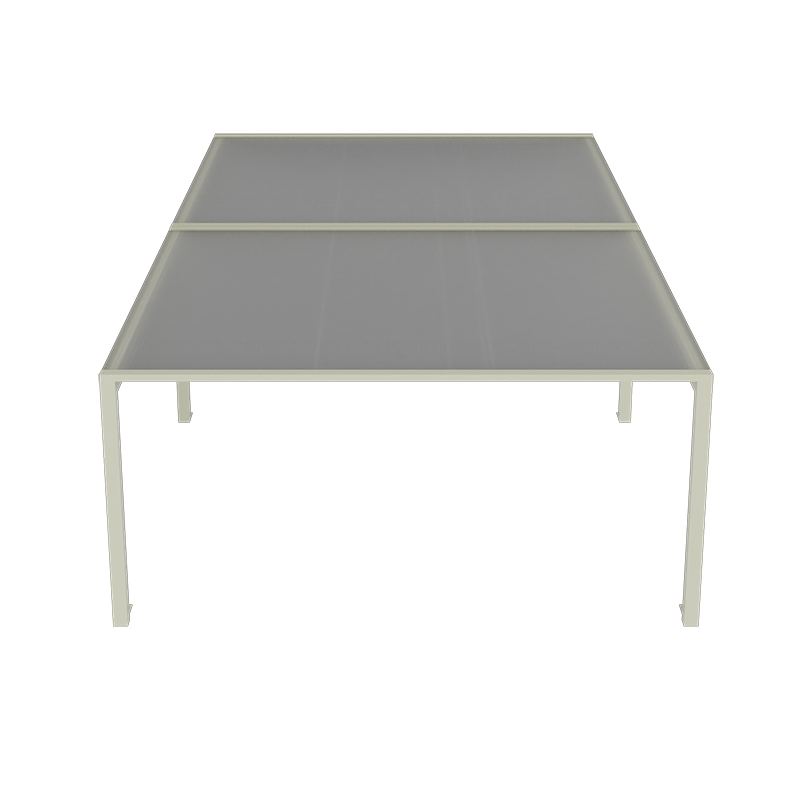
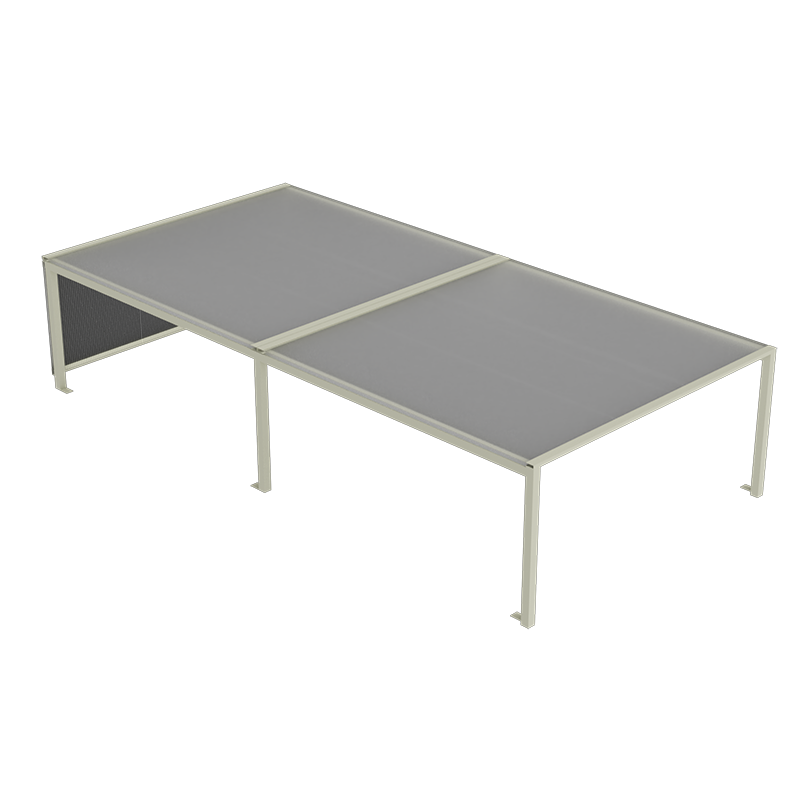
Overview
The Australian Solar System Cover is a heavy-duty physical enclosure engineered to shield solar inverters, battery storage units, and critical electrical components from environmental degradation.
Product Specification
|
Category |
Specification |
|
Chassis Material |
Marine-grade 5052 aluminum, 2.0mm thickness |
|
Surface Coating |
AkzoNobel Interpon® powder coating, 80 μm |
|
Corrosion Resistance |
ASTM B117 salt spray ≥ 1,500 hours |
|
Ventilation Design |
45° downward louver structure, ~2.5 m/s airflow |
|
Thermal Performance |
Up to 15°C surface temperature reduction under 42°C ambient |
|
Fasteners & Hardware |
Stainless Steel 316 full assembly |
|
Security Feature |
8mm padlock-compatible anti-theft hasp |
Application Scenarios & Compatibility
Utility & Desert Microgrids (15kW - 110kW+): Engineered from 2.5mm AL5052-H32 aluminum alloy to withstand continuous structural vibration and high-velocity dust in 50MW+ sites (e.g., Pilbara, Western Australia).
Residential & VPP Systems (3kW - 10kW): Low-profile, single or dual-bay enclosures compliant with residential strata guidelines while matching OEM thermal dissipation boundaries.
OEM Boundary Integration: Pre-engineered dimensions for Fronius Primo/Symo, SMA Sunny Boy, Sungrow, and GoodWe that maintain a 120mm air-gap clearance to safeguard original factory warranties.
Universal Bracket Mounting: Slotted backplates with 50mm adjustable vertical and horizontal patterns for direct installation over existing wall brackets without on-site drilling.
Quality Control
Precision Machining: Utilizes 6000W Bystronic fiber lasers and 150-ton Amada CNC press brakes to maintain a dimensional tolerance of ±0.05mm and angle consistency within ±0.5° across 10,000-unit production runs.
Automated Welding & IP Rating: Continuous seam welding executed by Fanuc robotic arms, backed by 100% online high-pressure water testing to guarantee IP65/IP66 ingress protection at all chassis joints.
Surface Treatment Standards: Certified to ISO 12944 C5-M anti-corrosion standards via ASTM D3359 cross-hatch adhesion testing; a uniform 80-micron powder coat ensures a 15-year service life in coastal and high-UV environments.
Traceability: Automated coordinate measuring machine (CMM) dimension checks link every shipped crate directly to its raw material heat number and QC inspector ID.
Capacity & ECN Control: 250,000-unit annual capacity across a 8,000 m² facility, supported by structured Engineering Change Notice (ECN) management and custom venting configurations for batch orders exceeding 500 units.
Commercial Terms
MOQ & Tiered Pricing: Trial MOQ starts at 200 units for standard catalog sizes, with economies of scale applicable at 1,000+ units.
Incoterms: FOB Shanghai/Ningbo or CIF Sydney, Melbourne, Brisbane, and Fremantle.
Payment Terms: 30% T/T deposit upon order confirmation, 70% balance against presentation of the Bill of Lading (B/L); 100% sample fee credited upon the first full container order.
Lead Time: Standard batch runs of 1,000 units are completed and delivered to port within 25 to 30 calendar days from deposit clearance.
Rapid Prototyping: In-house tooling workshop delivers CNC laser prototypes in 5 days and a complete cycle from 3D CAD sign-off to golden sample within 14 days.
Packaging & Logistics
ISTA-3A Packaging
5-layer double-wall corrugated cartons with high-density EPE foam corners, secured by PET plastic strapping and multi-layer shrink wrap, limiting transit damage rates to under 0.2%.
Freight Cost Optimization
Knock-down flat-pack design increases container loading capacity by 65%, fitting up to 2,400 residential units per 40ft HQ container to reduce inbound ocean freight costs.
Australian Customs Compliance
Shipments consolidated on ISPM-15 heat-treated, stamped export wooden pallets with weatherproof barcode/SKU labeling showing the customer's PO and part numbers for immediate clearance at major Australian ports.
FAQ
Q: What is the expected service life in coastal Australian environments?
A: The enclosure is designed for a service life of 8–10 years in C5-M coastal exposure zones with annual salt deposition below 0.3 mg/cm². After 5 years, coating thickness typically remains above 60 μm under standard maintenance conditions.
Q: Does the enclosure affect the inverter thermal performance during peak summer load?
A: Independent field testing shows internal inverter surface temperature increases by less than 3°C compared to open installation under 1,000 W/m² irradiance. The airflow design maintains stable convection even at 45°C ambient temperature.
Q: Under what conditions can the thermal advantage decrease?
A: Performance improvement reduces when ambient wind speed falls below 0.5 m/s in fully sealed installation environments. In enclosed utility rooms without cross ventilation, temperature reduction may drop to around 6–8°C.
Q: Has the product been tested by third-party certification bodies?
A: Samples have been validated through IEC 60529 ingress protection testing and salt spray evaluation based on ASTM B117 methodology. Independent verification reports are available for bulk OEM procurement requests.
Q: What happens if the coating is scratched or damaged during installation?
A: Localized coating damage will not immediately lead to structural corrosion due to the 5052-H32 aluminum substrate. However, touch-up coating is recommended within 30 days in coastal installations.
Q: How long does a typical installation take per unit?
A: A standard wall-mounted installation takes approximately 12–18 minutes for a trained technician using pre-aligned bracket slots. No on-site drilling reduces installation labor by roughly 30–40% compared to custom enclosures.
Q: Is the enclosure compliant with Australian electrical installation standards?
A: The design is aligned with AS/NZS 3000 clearance and ventilation principles for external electrical enclosures. Final compliance depends on system-level installation approval by certified electricians.
Q: Will the enclosure void inverter manufacturer warranty?
A: The system maintains a minimum 120 mm clearance from inverter housing, which aligns with major OEM ventilation requirements. Compatibility testing has been conducted for Fronius, SMA, Sungrow, and GoodWe models without warranty interference.


